Your cart is empty
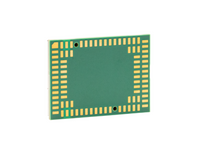
Iridium Certus™ 9704 Module
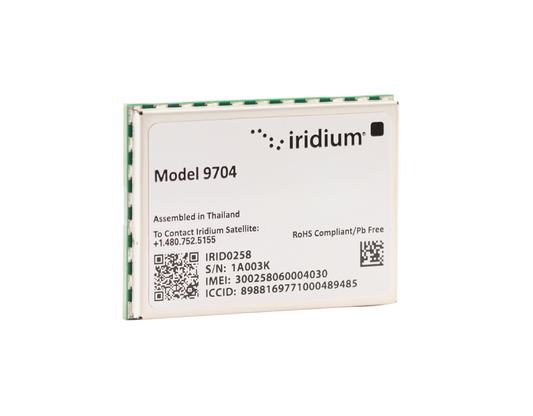
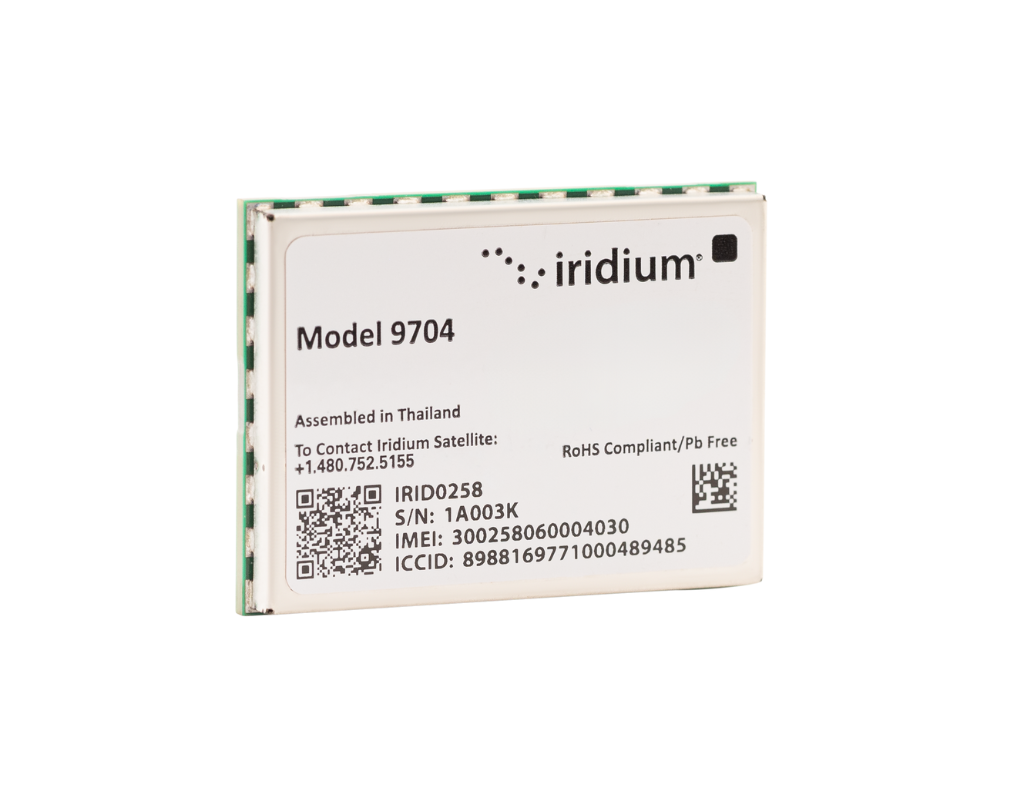
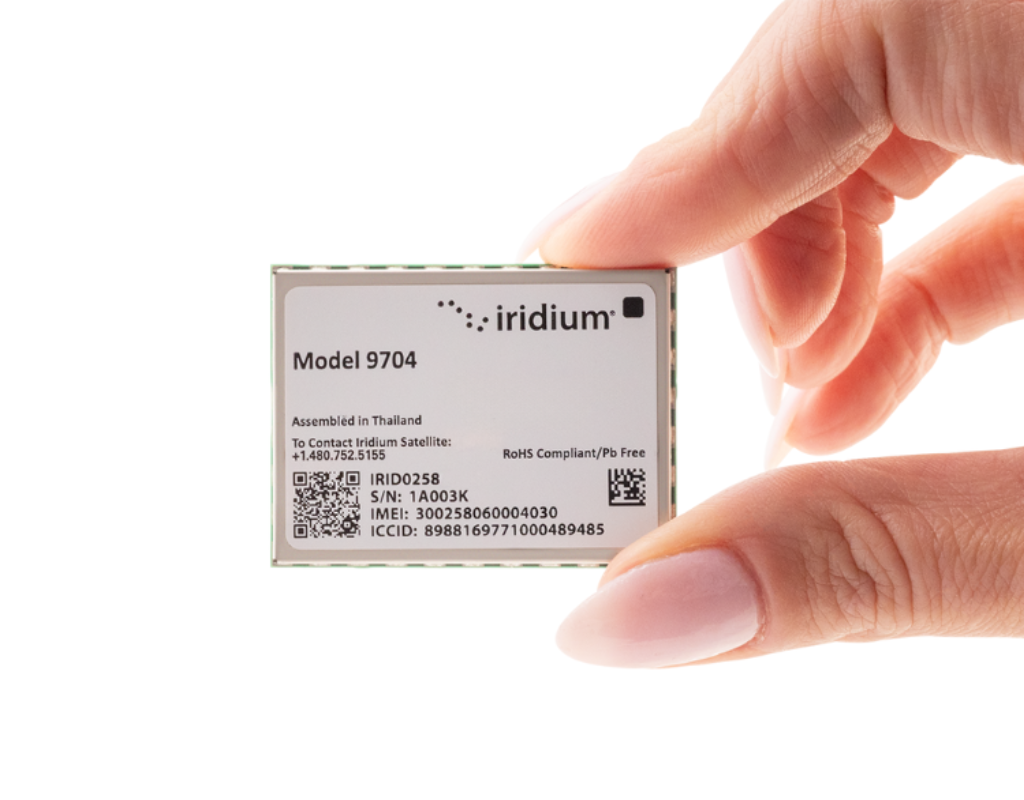
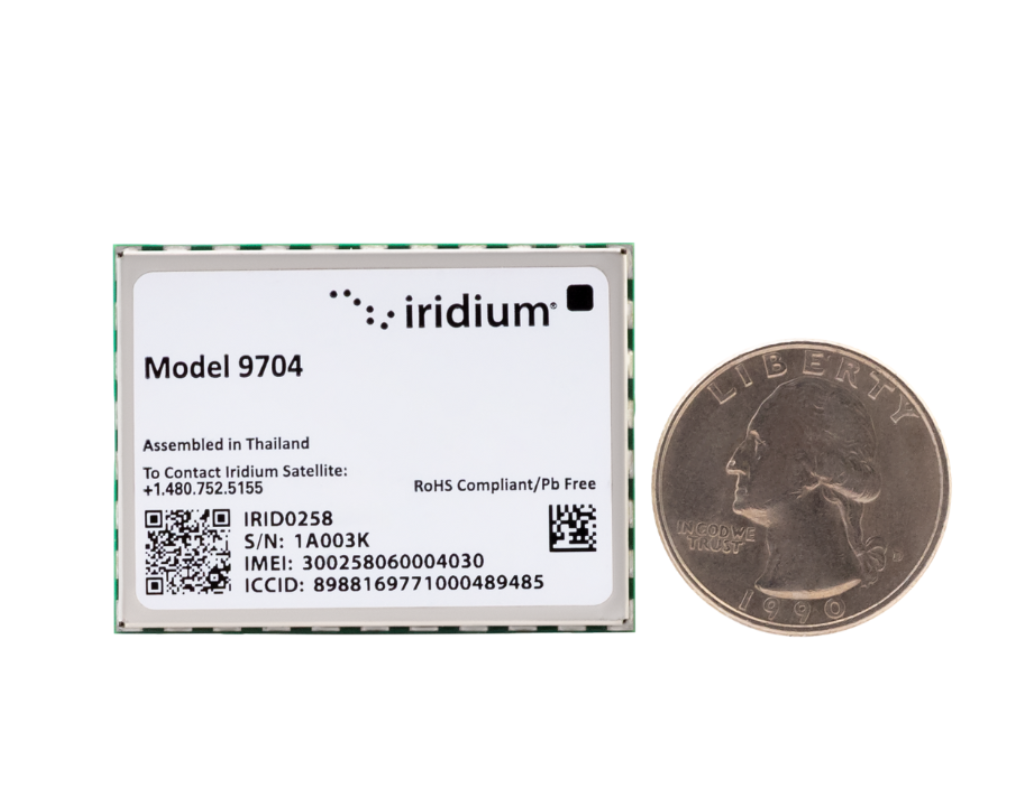
The Iridium Certus™ 9704 Module is a compact, energy-efficient satellite IoT module designed for seamless integration into industrial and remote applications. With global coverage, low power consumption, and IMT®-optimised messaging, it enables reliable data transmission for mission-critical solutions.
Embedded satellite IoT connectivity, built for devices that go beyond coverage
The Iridium Certus™ 9704 module is a next-generation satellite communication transceiver designed for developers and manufacturers building connected devices that need to work anywhere in the world. It brings together low power consumption, global coverage, and modern data capabilities in a form factor that can be embedded directly into your hardware.
If your product needs to operate far beyond the limits of cellular networks, whether that’s in the middle of the ocean, deep in a mining site, or across remote infrastructure, the 9704 gives you a dependable way to send and receive data without relying on local connectivity.
A new standard for satellite IoT
The 9704 is part of Iridium’s move toward more capable, cloud-friendly IoT communication. Rather than relying on the older Short Burst Data approach, it uses Iridium Messaging Transport (IMT), which allows significantly larger messages and more flexible data handling.
What that means in practice is simple. You are no longer limited to tiny packets of telemetry. Devices using the 9704 can send structured datasets, system logs, alerts, and even small media files such as images or audio clips. That opens up a much broader range of applications, especially where context matters as much as the data itself.
At the same time, it keeps things efficient. The module is designed to operate on low power, making it well suited to battery-powered or solar-powered deployments that are expected to run for months or years without intervention.
Designed for integration, not adaptation
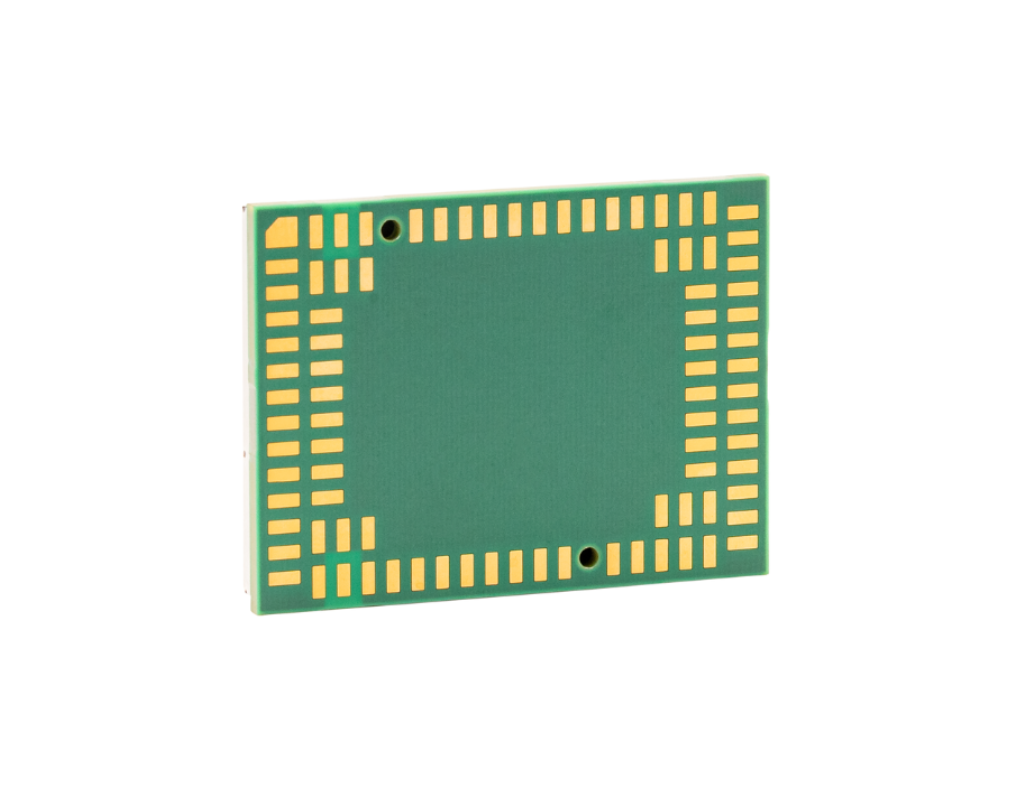
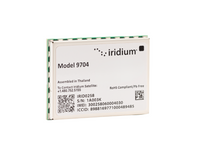
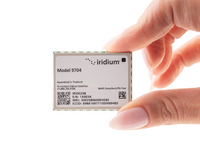
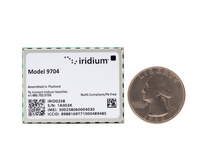
This is not an off-the-shelf terminal. The 9704 is a surface-mount module built for integration into custom devices at the design stage. Its compact footprint makes it easier to incorporate into space-constrained products, while its interface options give developers flexibility in how they connect and control it.
For OEMs, this means fewer compromises. You are not designing around the comms hardware, you are embedding it cleanly into your own product architecture.
Connectivity without borders
The module operates on the Iridium satellite network, which provides true global coverage, including polar regions. That removes one of the biggest limitations of terrestrial IoT solutions.
Devices fitted with the 9704 can stay connected across continents, oceans, and isolated environments without needing to switch networks or rely on patchy infrastructure. For applications that move between regions or operate in extreme locations, that consistency is often the difference between a working system and a failed one.
Where the 9704 fits best
The strength of the 9704 lies in enabling devices that need to operate independently, often in places where sending an engineer is expensive, difficult, or simply not possible.
In remote monitoring scenarios, it allows infrastructure and environmental systems to report their status in real time. That might be a pipeline in the middle of nowhere, a solar installation in a desert, or a network of environmental sensors tracking weather or water conditions.
In asset tracking, it gives visibility to equipment and vehicles that regularly move outside cellular coverage. Instead of losing sight of an asset once it leaves a network, you maintain a consistent stream of location and status data.
Industrial IoT is another natural fit. The module supports predictive maintenance, diagnostics, and system alerts for equipment operating in isolated or unmanned sites. It allows those systems to remain part of a wider network, even when they are physically disconnected from traditional infrastructure.
It also plays a role in autonomous systems. Whether it’s a drone, an unmanned ground vehicle, or a remote vessel, the ability to send commands and receive status updates over a global satellite link adds a layer of control and safety that would otherwise be missing.
A clear step forward from legacy modules
For those familiar with older Iridium modules, the 9704 represents a meaningful shift rather than a small upgrade.
Message sizes are dramatically larger, which changes what your device can actually communicate. Power consumption has been reduced, which extends deployment life and reduces maintenance cycles. The overall design is more aligned with modern IoT systems, making integration cleaner and more scalable.
In short, it is built for today’s connected devices, not yesterday’s constraints.
What to be aware of
The 9704 is a data-focused module. It is not designed for voice communication or high-bandwidth applications like streaming. Instead, it is optimised for efficient, reliable data transfer in environments where connectivity is limited or unavailable.
It is also aimed squarely at developers and integrators. Bringing it into a product requires hardware design, antenna integration, and system-level planning. For the right application, that effort pays off in a highly capable and flexible communication solution.
Bringing it all together
The Iridium Certus™ 9704 module is built for a specific kind of challenge, creating devices that remain connected when everything else drops away. It combines global satellite coverage with modern messaging capabilities and low power operation, all within a form factor designed for embedded use.
For companies building the next generation of remote, autonomous, or infrastructure-connected systems, it offers a reliable backbone that can scale with your application and operate wherever it is deployed.