
Your cart is empty


Which satellite phone is best for you?
Compare Iridium, Inmarsat, Thuraya, and satellite push-to-talk options, understand the coverage trade-offs, and find the handset that fits your travel, operations, or emergency communications needs.
What Is a Satellite Phone, and Why Do They Matter?
Satellite phones are mobile communication devices designed to keep you connected when traditional networks can’t. Unlike standard smartphones, which rely on nearby cell towers, satellite phones communicate directly with satellites orbiting the Earth. This means they can operate in locations where terrestrial coverage is unavailable, including remote landscapes, offshore environments, and regions affected by infrastructure failure.
At a basic level, a satellite phone works by sending your voice, message, or data signal up to a satellite in space. That satellite then relays the signal back down to a ground station, which connects it to the wider telecommunications network, allowing you to reach another phone, whether that’s a mobile, landline, or another satellite device.
This direct link to space-based infrastructure is what enables communication far beyond the limits of traditional mobile coverage.
Because they don’t depend on physical towers or local infrastructure, satellite phones are widely used in environments where connectivity is critical but unreliable. This includes maritime operations, aviation, remote fieldwork, emergency response, logistics, and expedition travel. In situations where cellular networks are congested, damaged, or simply non-existent, satellite phones provide a dependable fallback for maintaining contact and coordinating activity.
Most satellite phones offer core communication features such as voice calling and SMS messaging, with many models also supporting GPS positioning, SOS alerting, and basic data services. While they function similarly to a standard mobile phone from a user perspective, they do require a clear line of sight to the sky to connect effectively, as signals must travel directly between the device and the satellite overhead.
Start with coverage, then choose the handset
Satellite coverage varies by network, so checking coverage maps helps ensure your phone will work reliably wherever you plan to use it. Here are the main network coverage maps.
Iridium

inmarsat

thuraya

Globalstar

iridium satellite phones
Iridium is usually the safest recommendation when the user may travel widely, move through different regions, work offshore, or head into higher latitudes where regional systems are not suitable. If the main question is “will it work almost anywhere I go?”, Iridium is often the first place to start.
Best for: global travel, emergency preparedness, maritime use, remote operations, and users who do not want to be boxed in by regional coverage limits.

inmarsat satellite phones
Inmarsat is a good fit for users who want a simpler sat phone buying path and do not need polar coverage. It often suits travelers, field users, NGOs, and practical buyers who want dependable handheld voice without stepping up to Iridium unless they really need the extra reach.
Best for: most remote travel and field use outside the polar extremes, especially where value and straightforward handheld use matter.
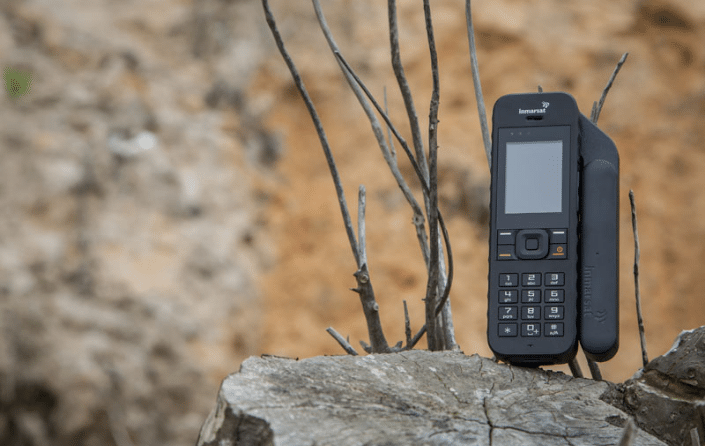
thuraya satellite phones
Thuraya makes most sense when the user knows they will stay inside the coverage footprint and wants a strong regional option. It is especially relevant for users working across Europe, Africa, the Middle East, and much of Asia and Australia, where it can be a practical alternative to more globally focused networks.
Best for: regional travel and operations where Thuraya coverage is known to fit the job and the user does not need the Americas or polar reach.

ICOM Satellite Push-to-Talk
ICOM satellite PTT is a better fit when the real objective is direct team communication, dispatch-style workflows, and instant one-to-many voice rather than standard handheld calling. It belongs in the buying guide because some users land in the phone category even though what they really need is push-to-talk.
Best for: teams, fleet-style communication, operations, security, command use, and users who need group voice workflows rather than standard sat phone behavior.

Don't forget your airtime
The buying journey should not end at the handset itself.
Once the network is chosen, the next question is do you need prepaid or monthly service?
frequently asked questions
Start with geography. If the route is global or uncertain, Iridium is usually the safest first look. If you are outside the poles, Inmarsat may fit. If the operation stays inside Thuraya’s regional footprint, Thuraya may be the stronger value option.
Not really. It sits in the satellite-phone collection today, but it is better understood as a satellite push-to-talk device for group communication workflows rather than a traditional handheld sat phone.
Yes. The handset needs a SIM and an airtime option, whether prepaid or monthly, so airtime should always be treated as part of the total cost.
Of course. Our experts are always on hand to answer any questions you may have. You can contact us via phone or email and we will be able to advise the best solution based on your location and requirements.